Introduction
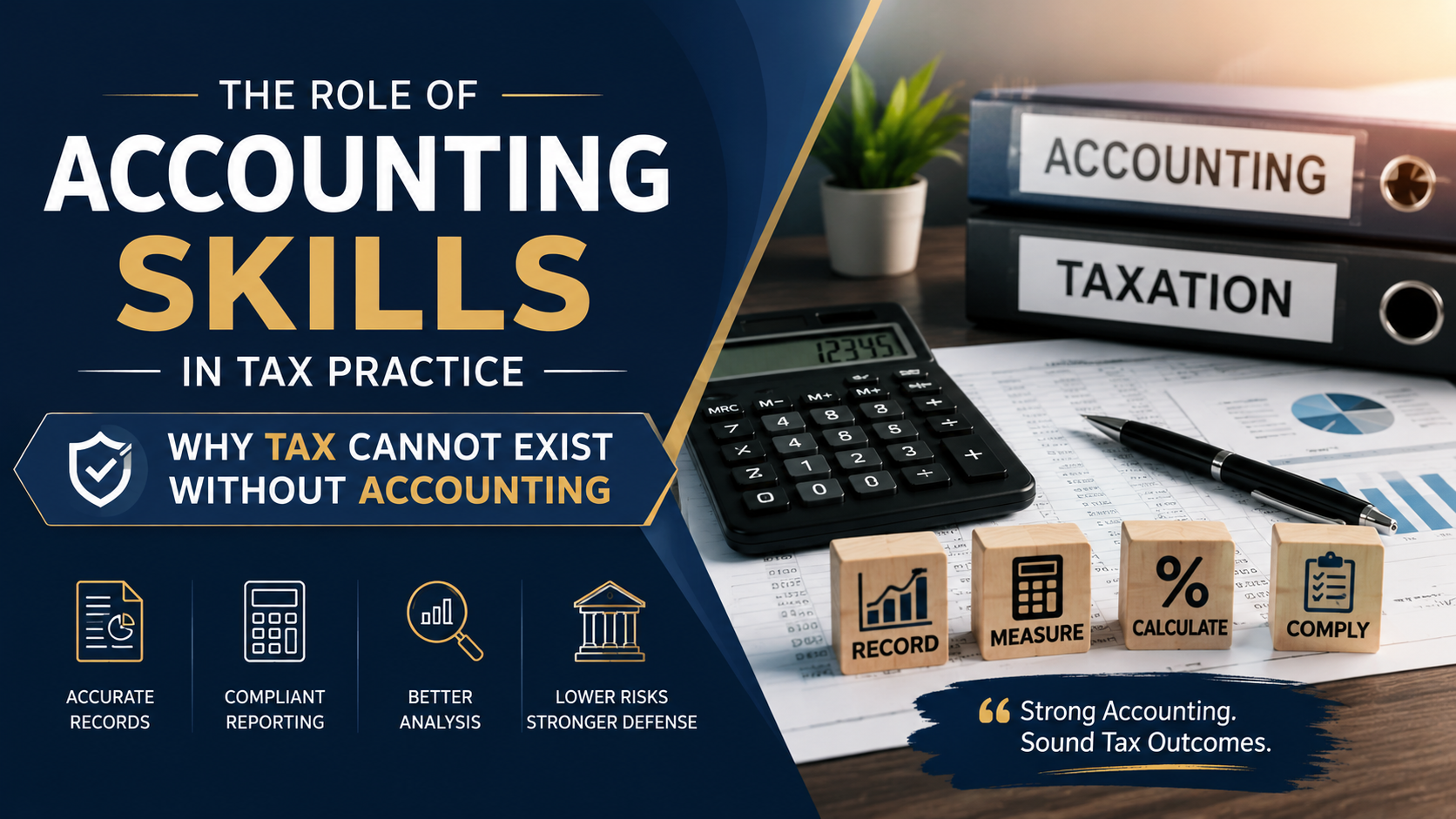
Taxation is often perceived as a law-oriented domain. However, taxation practice fundamentally relies on strong accounting foundations.
Without accounting clarity, tax compliance becomes vulnerable to errors, mismatches, and litigation risks.
This article explains why accounting skills are indispensable in tax practice.
Watch the Complete video Explanation
This topic has also been explained in detail in the video below. Watch for practical clarity and structured understanding
1. Accounting as the Base of Tax Computation
Income tax computation begins with:
- Profit & Loss Account
- Balance Sheet
- Ledger scrutiny
- Depreciation schedules
Incorrect accounting leads to incorrect tax reporting.
2. GST and Accounting Integration
GST compliance requires:
- Sales and purchase reconciliation
- ITC matching
- Output liability tracking
- Debit/credit note adjustments
These processes demand accounting accuracy.
3. Data Matching and Reporting
Modern tax administration relies on:
- AIS
- 26AS
- GSTR reconciliation
- TDS returns
All these depend on correct bookkeeping.
4. Practical Accounting Skills Required
Tax professionals must understand:
- Journal entries
- Ledger scrutiny
- Expense classification
- Revenue recognition
- Reconciliation statements
Taxation without accounting understanding leads to procedural risk.
Conclusion
Tax law knowledge without accounting skill is incomplete.
A strong tax professional is fundamentally a disciplined accounting thinker.
Accounting is not optional in taxation — it is foundational.