Introduction
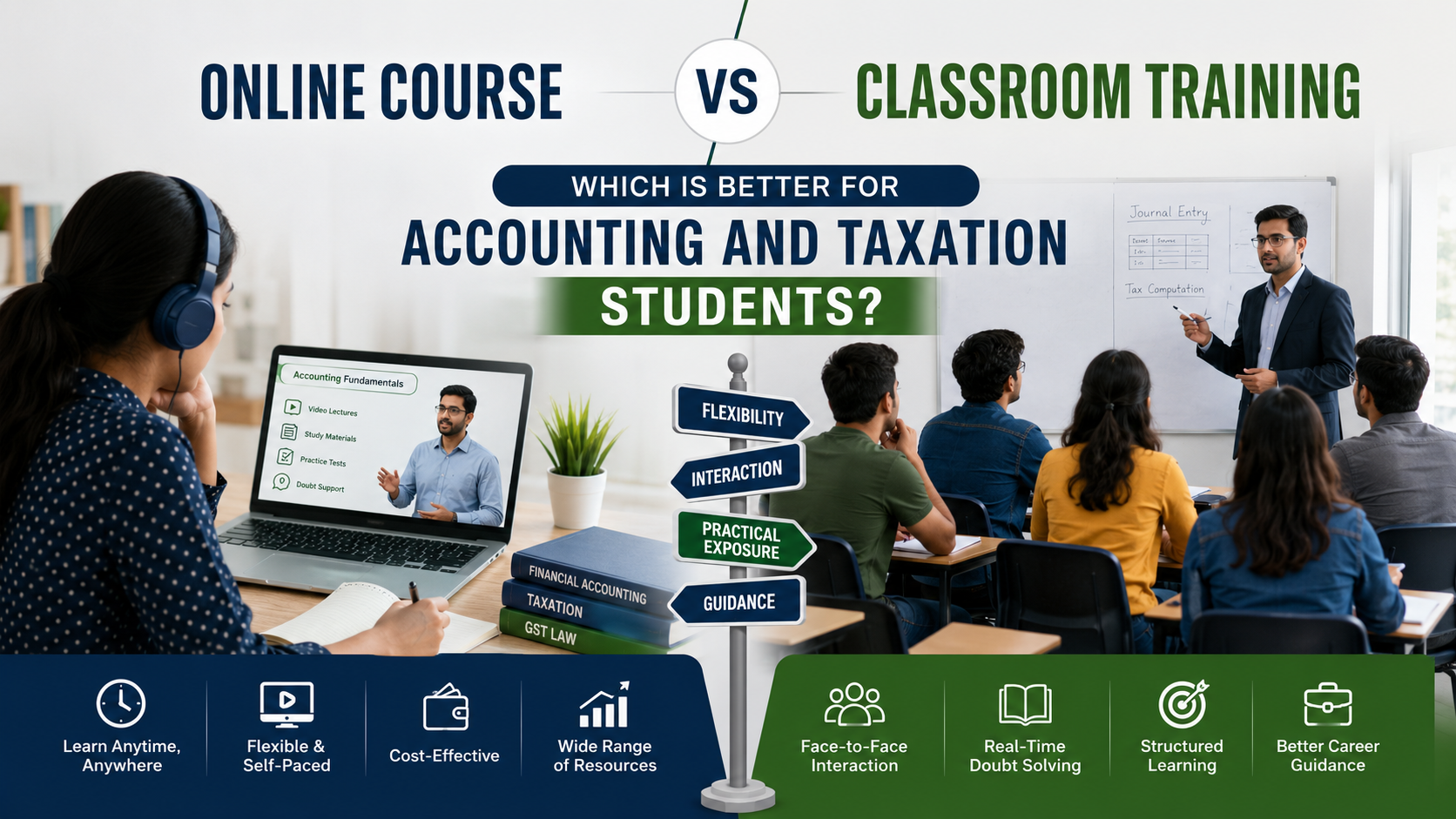
In today’s education landscape, students pursuing accounting and taxation careers often face a common dilemma: should they choose an online course or opt for classroom-based training?
With the rise of digital learning platforms and hybrid education models, both options are widely available. However, the real question is not which mode is universally better, but which mode is more suitable at a particular stage of learning.
For commerce students and aspiring tax professionals, the decision should be strategic rather than emotional. This article explores the advantages, limitations, and ideal situations for both online courses and classroom training in the context of accounting and taxation careers.
Watch the Complete video Explanation
This topic has also been explained in detail in the video below. Watch for practical clarity and structured understanding
Understanding the Nature of Accounting and Taxation Learning
Before comparing formats, it is important to understand the subject itself.
Accounting and taxation are not purely theoretical disciplines. While conceptual clarity is essential, practical exposure plays a critical role in building competence. Students must not only understand provisions of Income Tax and GST but also learn how to apply them in real scenarios such as:
- Filing returns
- Handling notices
- Performing reconciliations
- Preparing working papers
- Managing client documentation
The learning mode should support this dual requirement of concept + application.
Online Courses: Flexibility and Conceptual Clarity
Online courses have transformed professional education by making learning accessible and flexible.
Key Advantages of Online Learning
- Flexible Schedule – Students can learn at their own pace, making it suitable for working professionals or college students with limited time.
- Recorded Lectures – Concepts can be revisited multiple times, improving retention.
- Location Independence – No geographical limitations.
- Cost Efficiency – Travel and infrastructure costs are eliminated.
For students who already possess basic discipline and clarity about their goals, online courses can be extremely effective for:
- Concept revision
- Learning new updates
- Certification programs
- Structured theoretical understanding
However, online learning requires self-motivation and consistency. Without discipline, students may struggle to complete modules or practice regularly.
Classroom Training: Structure and Practical Supervision
Classroom-based training offers a structured and interactive learning environment.
Key Advantages of Classroom Training
- Fixed Routine – Regular schedule builds discipline.
- Live Doubt Resolution – Immediate clarification enhances understanding.
- Peer Learning Environment – Interaction with fellow learners improves engagement.
- Practical Assignments Under Supervision – Guided practice reduces conceptual gaps.
For beginners entering accounting or taxation fields for the first time, classroom training often provides stronger foundational support. The physical presence of a mentor and peers creates accountability.
In subjects such as GST return filing or income tax notice drafting, supervised practical exposure enhances confidence.
The Role of Learning Stage in Decision Making
Choosing between online and classroom learning depends significantly on the student’s stage.
1. Beginner Level
Students starting their accounting or taxation journey may benefit more from classroom-based structured training. Supervision and real-time guidance reduce confusion.
2. Intermediate Level
Students who already understand fundamentals may effectively switch to online learning for advanced modules or updates.
3. Working Professionals
Those already working in firms often prefer online courses due to flexibility and time constraints.
Hybrid Model: The Most Effective Approach
In practice, a hybrid model often produces the best results.
For example:
- Learn core concepts through structured online modules.
- Attend classroom workshops for practical exposure.
- Participate in internships for real case handling.
This layered learning approach ensures conceptual clarity along with hands-on application.
Common Mistakes Students Make
- Choosing a course based solely on price
- Selecting online mode without self-discipline
- Assuming classroom automatically guarantees expertise
- Ignoring practical exposure
The real focus should be on skill development rather than course format.
Conclusion
Online courses and classroom training are not competitors; they are tools designed for different learning needs.
The right choice depends on your learning stage, discipline level, and career objectives in accounting and taxation.
Students who make strategic, stage-based decisions are more likely to build long-term professional competence.