Learn the importance of professional ethics and responsibility in tax practice. Discover key ethical principles, professional conduct standards, and career-building values for tax professionals.
Introduction
Tax professionals play a vital role in India’s financial and regulatory system. They help businesses, professionals, and individuals comply with tax laws, maintain proper documentation, file returns, and respond to regulatory requirements.
Because tax professionals deal with sensitive financial information and legal compliance matters, the profession requires more than technical knowledge. It demands strong ethical values, professional responsibility, and unwavering integrity.
For commerce students planning a career in accounting and taxation, understanding professional ethics is just as important as learning GST, Income Tax, TDS, TCS, and compliance procedures.
A successful tax professional is not only known for technical expertise but also for honesty, reliability, and professional conduct.
Watch the Complete Video Explanation
This topic has also been explained in detail through our video session. Watch the complete explanation to understand how internships and professional courses work together to build practical expertise in accounting and taxation.
Why Professional Ethics Matter in Tax Practice
Tax professionals operate at the intersection of:
- Law
- Finance
- Compliance
- Business Advisory
Clients trust professionals to provide accurate guidance and ensure compliance with tax regulations.
An unethical decision can result in:
- Legal penalties
- Financial losses
- Regulatory action
- Client disputes
- Reputational damage
Therefore, professional ethics form the foundation of a successful taxation career.
Without trust, even the most technically skilled professional cannot build a sustainable practice.
Understanding Professional Ethics in Taxation
Professional ethics refers to the standards of conduct that guide professionals in making responsible and lawful decisions.
In tax practice, ethics ensures that professionals:
- Act honestly
- Follow legal requirements
- Protect client interests
- Maintain confidentiality
- Exercise independent judgment
Ethical behaviour creates trust between professionals, clients, regulatory authorities, and society.
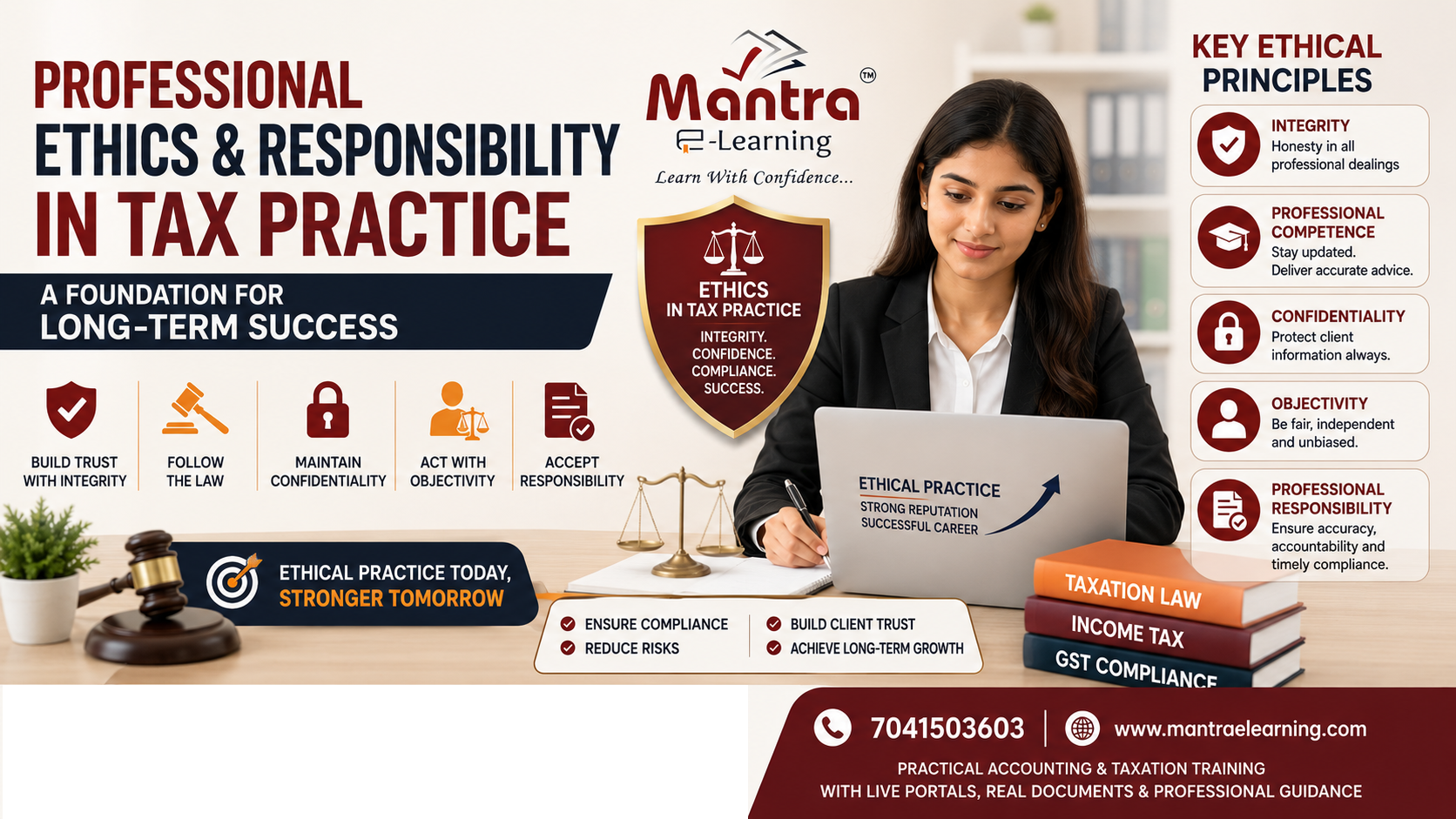
Key Ethical Principles in Tax Practice
1. Integrity
Integrity is the cornerstone of every successful tax professional.
It means:
- Being honest in all professional dealings
- Providing accurate advice
- Avoiding misleading representations
- Following the law even when facing pressure
A tax consultant should recommend lawful tax planning strategies rather than questionable methods designed solely to reduce tax liability.
Clients may come and go, but professional reputation remains for a lifetime.
2. Professional Competence
Tax laws are constantly evolving.
Frequent amendments in:
- Income Tax Act
- GST Regulations
- TDS and TCS Provisions
- Compliance Procedures
require professionals to continuously update their knowledge.
Professional competence means:
- Staying informed about legal changes
- Improving technical skills
- Participating in professional development
- Providing accurate and updated guidance
A professional who stops learning quickly becomes outdated.
3. Confidentiality
Tax professionals regularly handle sensitive information such as:
- Financial statements
- Tax returns
- Business records
- Personal income details
- Legal documents
Protecting client information is a critical ethical obligation.
Maintaining confidentiality builds trust and strengthens professional relationships.
Sharing client information without authorization can damage both professional credibility and client confidence.
4. Objectivity
Professional advice should always remain unbiased.
Tax professionals must make decisions based on:
- Facts
- Legal provisions
- Available evidence
rather than personal interests or external influence.
Objectivity ensures that professional recommendations remain fair, independent, and legally sound.
5. Professional Responsibility
A tax professional is responsible for ensuring that compliance work is completed accurately and within prescribed timelines.
This includes:
- Filing returns correctly
- Reviewing supporting documents
- Maintaining records
- Advising clients on compliance obligations
- Communicating potential risks
Professional responsibility extends beyond task completion and includes accountability for the quality of work performed.
Ethical Challenges Faced by Tax Professionals
In real-world practice, professionals frequently encounter ethical dilemmas.
Some common situations include:
Incomplete Documentation
Clients may provide insufficient records while expecting complete compliance services.
Aggressive Tax Avoidance Requests
Some clients may seek strategies that push beyond legal boundaries.
Pressure to Alter Financial Information
Professionals may occasionally face requests to manipulate records for short-term benefits.
Compliance Shortcuts
Time pressure can tempt individuals to ignore proper procedures.
In such situations, ethical professionals prioritize legal compliance and professional standards over immediate gains.
Why Integrity Creates Long-Term Career Success
Many students believe technical knowledge alone determines professional success.
However, in taxation, reputation is often more valuable than technical expertise.
A strong reputation is built through:
- Honest advice
- Accurate compliance
- Transparent communication
- Consistent professional conduct
- Ethical decision-making
Clients prefer professionals they can trust with sensitive financial matters.
Trust becomes a powerful competitive advantage in tax practice.
Professional Ethics for Commerce Students
Students preparing for careers in accounting and taxation should begin developing professional ethics early.
Important habits include:
- Maintaining accuracy in assignments
- Respecting confidentiality
- Following proper documentation procedures
- Developing accountability
- Building discipline and consistency
Professional values developed during training often become lifelong habits.
The Connection Between Ethics and Tax Compliance
Tax compliance is not only about filing returns.
It also involves:
- Responsible reporting
- Accurate disclosures
- Proper documentation
- Legal compliance
- Professional accountability
Ethics ensures that compliance activities are performed correctly and responsibly.
This protects both clients and professionals from unnecessary risks.
Why Ethical Tax Professionals Are Highly Valued
Businesses increasingly seek professionals who offer:
Technical expertise
Practical knowledge
Ethical guidance
Reliable compliance support
Long-term professional relationships
In today’s regulatory environment, ethical conduct is often the factor that differentiates outstanding professionals from average practitioners.
Why Students Choose Mantra E Learning for Practical Taxation Training
At Mantra E Learning, students are trained not only in technical taxation concepts but also in professional responsibility and ethical work practices.
Training includes:
- Practical GST Compliance
- Income Tax Procedures
- TDS and TCS Compliance
- Real Documentation Standards
- Client Communication Skills
- Professional Workflows
- Live Portal Practice
- Industry-Oriented Training
The goal is to develop competent professionals who combine technical expertise with strong professional values.
Frequently Asked Questions (FAQs)
Why are ethics important in tax practice?
Ethics help tax professionals maintain trust, comply with laws, protect client interests, and build a strong professional reputation.
What is the most important ethical principle in taxation?
Integrity is often considered the most important principle because it influences every professional decision.
How does confidentiality apply to tax professionals?
Tax professionals handle sensitive financial information and must protect client data from unauthorized disclosure.
Can ethical conduct improve career growth?
Yes. Professionals known for honesty and reliability often build stronger client relationships and achieve long-term success.
What skills should commerce students develop for a taxation career?
Students should focus on technical knowledge, communication skills, analytical thinking, documentation practices, and professional ethics.
Conclusion
Professional ethics and responsibility are the foundation of a successful career in tax practice.
While technical knowledge, GST expertise, and Income Tax skills are essential, integrity and professional conduct ultimately determine a professional’s credibility and long-term success.
Commerce students entering the taxation profession should understand that sustainable career growth comes from combining expertise with ethical behaviour.
In taxation, knowledge may open opportunities, but trust built through ethical conduct creates lasting success.
Build a Career in Accounting & Taxation with Practical Learning
Learn GST, Income Tax, TDS, TCS, Compliance Procedures, and Professional Tax Practice through practical industry-oriented training.
📞 Contact: 7041503603