For many commerce students, the concepts of TDS (Tax Deducted at Source) and TCS (Tax Collected at Source) often appear confusing and overly technical. In academic learning, these concepts are typically explained through definitions and a few examples, but their real importance in the tax system is often not fully understood.
In reality, TDS and TCS are among the most important compliance mechanisms in the Indian taxation system. They play a crucial role in ensuring tax collection, maintaining financial transparency, and enabling the government to track financial transactions.
Understanding TDS and TCS is essential not only for students preparing for professional careers in taxation but also for anyone who wishes to understand how the modern tax system functions in practice. This article explains the basic concepts, purpose, and practical importance of TDS and TCS in simple terms
Watch the Complete Video Explanation
This topic has also been explained in detail through our video session. Watch the complete explanation to understand how internships and professional courses work together to build practical expertise in accounting and taxation.
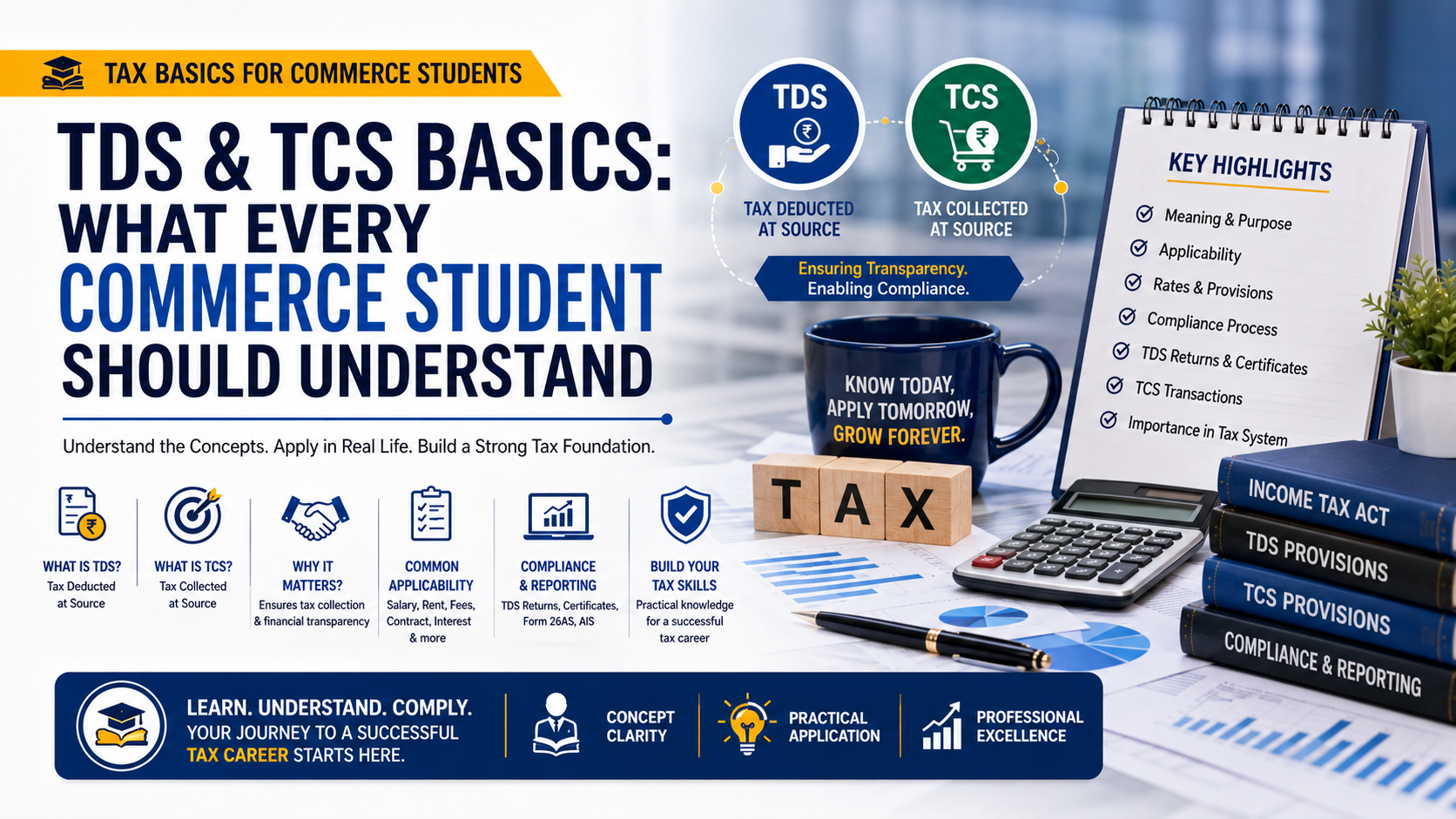
What is TDS?
TDS stands for Tax Deducted at Source.
It is a system where tax is deducted at the time of making certain payments rather than waiting for the taxpayer to pay the tax later while filing the income tax return.
In simple words, the government collects tax in advance through the person making the payment.
For example:
If a company pays professional fees to a consultant, the company may deduct a certain percentage of tax before making the payment and deposit that tax with the government.
The consultant receives the net payment, and the deducted tax is reflected in their tax credit.
This system ensures that taxes are collected throughout the year instead of only at the time of return filing.
Purpose of the TDS System
The TDS system was introduced to achieve several important objectives.
First, it helps the government ensure regular tax collection. Instead of relying on taxpayers to pay taxes at the end of the year, tax is collected at the time of transactions.
Second, TDS helps reduce the possibility of tax evasion. Since tax is deducted by the payer and reported to the government, it becomes difficult to conceal income.
Third, the system enables the income tax department to track financial transactions through reporting systems such as Form 26AS and AIS (Annual Information Statement).
Therefore, TDS is not just a deduction mechanism; it is a data reporting and compliance monitoring system.
Common Situations Where TDS Applies
TDS is applicable in several types of transactions. Some common examples include:
• Salary payments
• Professional fees
• Contractor payments
• Rent payments
• Commission or brokerage payments
• Interest payments
Different types of payments attract different TDS provisions and rates.
For example, professional fees may attract TDS under Section 194J, while contractor payments may fall under Section 194C. A tax professional must identify the nature of payment and determine whether TDS is applicable
What is TCS?
TCS stands for Tax Collected at Source.
Unlike TDS, where the payer deducts tax while making a payment, TCS is collected by the seller from the buyer at the time of sale of certain goods or transactions.
In this system, the seller collects tax from the buyer and deposits it with the government.
For example:
When certain specified goods are sold, the seller may collect an additional amount as tax and deposit it with the government. Just like TDS, the collected tax appears as a credit in the buyer’s tax records.
Why TCS is Important
TCS is designed to monitor high-value or specific transactions where the government wants to ensure proper tax reporting.
This helps authorities track:
• high-value purchases
• large financial transactions
• sectors where tax evasion risk is higher
By collecting tax at the source of transaction, the system helps create a financial reporting trail.
This information is used in data matching and compliance verification.
Role of TDS and TCS in the Modern Tax System
Today’s tax administration heavily relies on data-driven compliance systems.
Information collected through TDS and TCS reporting flows into centralized databases such as:
• Form 26AS
• AIS (Annual Information Statement)
• compliance analytics systems
The income tax department uses this information to compare reported income with financial transactions.
If mismatches are detected, the department may issue information notices or verification queries.
Therefore, TDS and TCS serve as the foundation of data matching in taxation.
Why Commerce Students Must Understand TDS and TCS
Many commerce students focus mainly on theoretical subjects without fully understanding how taxation works in practice.
However, in real tax practice, TDS compliance forms a significant part of professional work.
Tax professionals regularly handle tasks such as:
• determining TDS applicability
• calculating deduction amounts
• filing TDS returns
• issuing TDS certificates
• responding to TDS-related notices
Without understanding TDS provisions, it becomes difficult to work effectively in the taxation field.
Similarly, understanding TCS is important for professionals dealing with businesses engaged in specified transactions.
Practical Skills Students Should Develop
Students who wish to build careers in taxation should gradually develop practical understanding in areas such as:
• identifying TDS applicability in transactions
• understanding deduction rates
• learning compliance procedures
• studying reporting systems such as Form 26AS
• understanding the role of AIS and financial data reporting
This practical exposure helps bridge the gap between academic learning and professional practice.
Common Misconceptions About TDS and TCS
Students often assume that TDS is simply a deduction mechanism and that its only purpose is tax collection.
However, in modern taxation systems, TDS also serves as a financial reporting tool.
Similarly, some people believe that TCS increases the cost of transactions.
In reality, TCS usually acts as a tax credit, which the taxpayer can claim while filing the income tax return.
Understanding these aspects helps remove confusion and provides clarity about how the tax system operates.
Conclusion
TDS and TCS are essential components of the Indian tax framework. They ensure continuous tax collection, improve transparency in financial transactions, and enable the government to monitor compliance through data analysis.
For commerce students aspiring to build careers in taxation, understanding these concepts is not optional. It is a fundamental part of professional knowledge.
By developing a clear understanding of TDS and TCS, students can better prepare themselves for practical tax work and gain deeper insight into how the taxation system functions in real life.