Introduction
Many commerce students face an important career decision:
Should I focus on an accounting internship or join a professional accounting and taxation course?
This confusion is common among students preparing for careers in accounting, GST, income tax, TDS, TCS, and financial compliance.
The truth is that internships and professional courses should not be viewed as competing options. The most successful accounting professionals combine structured learning with practical exposure.
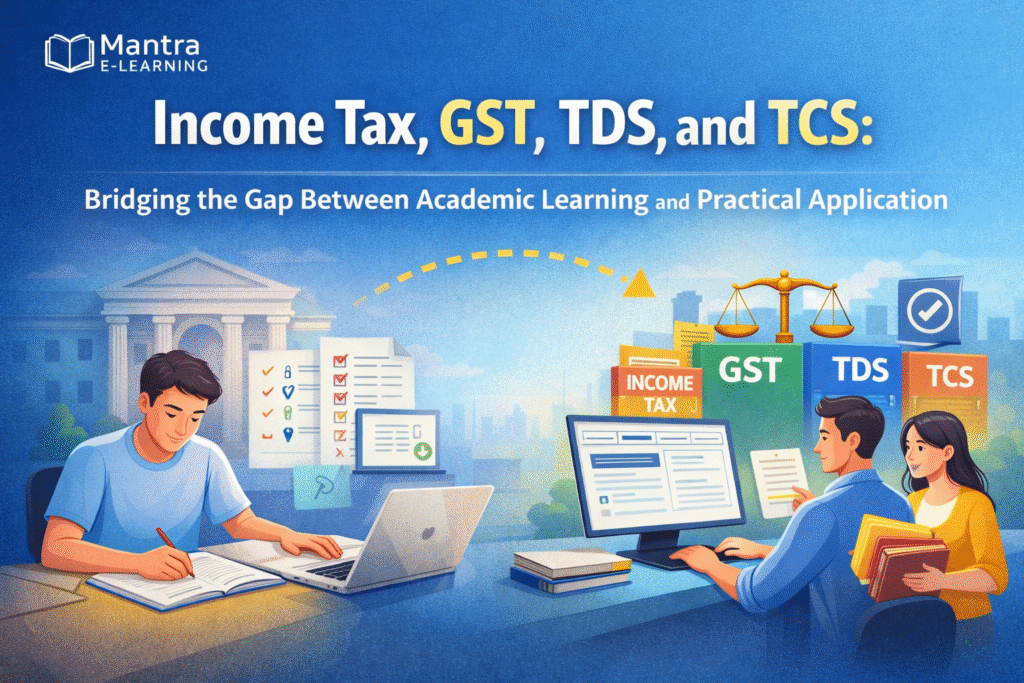
A professional accounting and taxation course provides conceptual clarity, while an internship develops real-world skills. Together, they create a strong foundation for long-term career growth in the accounting and taxation industry.
Watch the Complete Video Explanation
This topic has also been explained in detail through our video session. Watch the complete explanation to understand how internships and professional courses work together to build practical expertise in accounting and taxation.
Why Accounting and Taxation Careers Require Both Knowledge and Practical Exposure
Accounting and taxation are practical professions.
Success requires more than simply understanding provisions and sections. Professionals must know how to apply those concepts in real business situations.
Students aspiring to become accountants, tax consultants, GST executives, or compliance professionals must learn:
- GST return filing
- Income Tax compliance
- TDS and TCS procedures
- Drafting professional communications
- Handling notices
- Client documentation management
- Financial reconciliations
- Government portal operations
This combination of knowledge and execution can only be developed through both learning and practical exposure.
The Role of Professional Accounting and Taxation Courses
Professional courses provide structured and systematic learning.
They help students understand:
- Income Tax provisions
- GST compliance procedures
- TDS and TCS mechanisms
- Drafting formats
- Legal deadlines
- Accounting workflows
- Compliance frameworks
A well-designed Accounting and Taxation Course builds concepts step by step, ensuring that students understand not only what to do but also why it is done. Without conceptual clarity, practical work often becomes mechanical and dependent on instructions.
The Role of Accounting Internship Exposure
Internships introduce students to real-world professional environments.
During an Accounting Internship or Taxation Internship, students gain exposure to:
- Client communication
- Document collection processes
- GST Portal operations
- Income Tax Portal navigation
- Return filing workflows
- Notice handling procedures
- Compliance tracking systems
Internships also help students develop professional behaviour, workplace discipline, and communication skills.
However, many internship programs focus primarily on task completion rather than concept-building.
Limitation of Choosing Only an Internship
Students who rely solely on internship experience may face several challenges:
Common Limitations
- Performing tasks without understanding concepts
- Dependence on senior staff for decision-making
- Difficulty interpreting tax provisions
- Weak drafting skills
- Limited independent problem-solving ability
While practical exposure is valuable, long-term professional growth requires a strong theoretical foundation.
Limitation of Choosing Only a Professional Course
Students who focus only on theoretical learning often struggle when facing practical situations.
Common Challenges
- Understanding sections but struggling with actual filing
- Difficulty handling client communication
- Confusion during GST mismatches
- Lack of confidence while working on live portals
- Inability to manage real compliance situations
Theory creates awareness, but practical experience builds confidence.
The Smart Integration Model: Learn, Apply, Improve
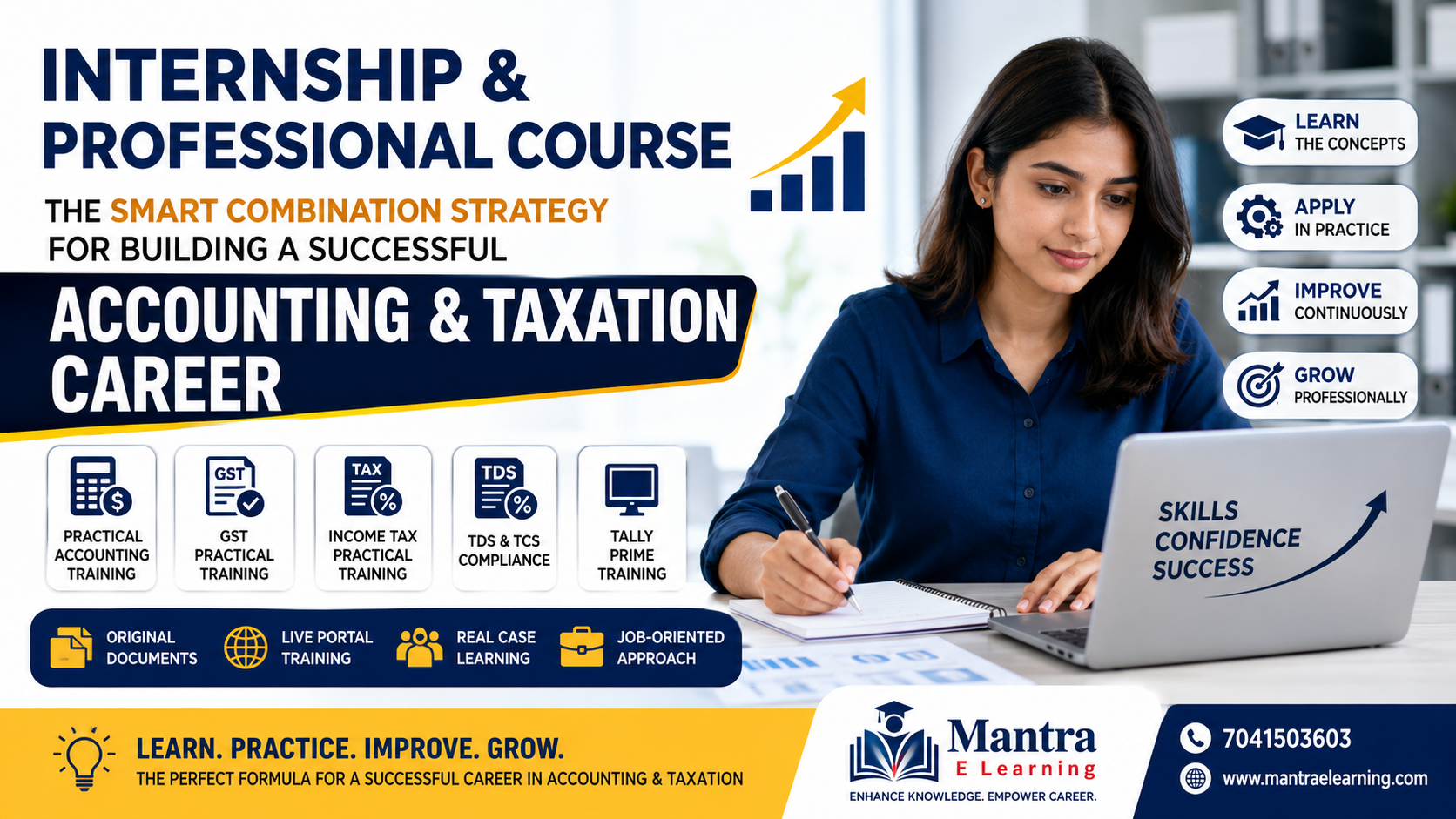
The most effective growth strategy follows a continuous learning cycle:
Step 1 – Learn
Understand accounting, GST, and income tax concepts through structured training.
Step 2 – Apply
Use those concepts during internship assignments and practical work.
Step 3 – Identify Mistakes
Observe practical challenges and knowledge gaps.
Step 4 – Clarify with Mentors
Seek guidance and improve understanding.
Step 5 – Repeat
Continue refining skills through regular application.
This cycle accelerates learning and builds professional competence much faster than following only one path.
Practical Example: GST Input Tax Credit Learning
Consider a student learning about GST Input Tax Credit (ITC) in a professional GST Course.
During an internship, the student:
- Reviews GSTR-2B reports
- Performs reconciliations
- Identifies mismatches
- Understands practical resolution methods
This real-world exposure helps connect classroom concepts with actual compliance requirements.
The result is deeper understanding and stronger professional confidence.
Suggested Career Roadmap for Commerce Students
Step 1 – Join a Professional Accounting & Taxation Course
Build strong fundamentals in:
- Accounting
- GST
- Income Tax
- TDS
- TCS
- Tally Prime
Step 2 – Start a Part-Time Internship
Even limited practical exposure can significantly improve understanding.
Step 3 – Maintain a Learning Notebook
Record:
- Practical cases
- Observations
- Common mistakes
- Questions and doubts
Step 4 – Review Weekly
Connect internship experiences with concepts learned in your course.
This approach strengthens both knowledge and execution skills.
Common Mistakes Students Make
Many students delay their career growth by making avoidable mistakes:
1. Choosing Internships Without Learning Opportunities
Not every internship provides meaningful exposure.
2. Focusing Only on Certificates
Employers value practical skills more than certificates alone.
3. Expecting Immediate Salary Growth
Accounting and taxation careers reward skill development over time.
4. Ignoring Documentation and Drafting Skills
Strong documentation habits are essential for professional success.
Patience and consistency are key factors in long-term growth.
Long-Term Career Advantages of Combining Internship and Professional Course
Students who combine structured learning with practical exposure typically:
✅ Draft professional replies more effectively
✅ Understand compliance systems deeply
✅ Gain confidence faster
✅ Become independent professionals sooner
✅ Perform better in interviews
✅ Adapt quickly to workplace requirements
This combination creates job-ready professionals who can contribute effectively from the beginning of their careers.
Why Students Choose Mantra E Learning for Practical Accounting and Taxation Training
At Mantra E Learning, students learn through a practical training approach designed to bridge the gap between theory and real-world application.
Our training includes:
- Practical Accounting Training
- GST Practical Course
- Income Tax Practical Training
- TDS and TCS Compliance
- Original Business Documents
- Live GST Portal Practice
- Live Income Tax Portal Training
- Tally Prime Software Training
- Real Case-Based Learning
The goal is not just course completion but career readiness.
Frequently Asked Questions (FAQs)
Is an accounting internship enough to build a successful career?
An internship provides valuable exposure, but combining it with a professional accounting and taxation course creates stronger long-term career growth.
Should I complete a course before starting an internship?
Learning the basics first helps students understand and apply practical work more effectively during internships.
Can I do a part-time accounting internship while studying?
Yes. Part-time internships are often ideal because they allow students to balance learning and practical exposure simultaneously.
What is more important: certificate or skill?
Skills are more valuable for career growth. Certificates support your profile, but practical competence drives success.
What is the best strategy for accounting and taxation students?
The most effective strategy is combining a professional accounting and taxation course with practical internship experience.
Conclusion
Internships and professional courses are not alternatives. They are complementary components of professional development.
A professional course provides conceptual understanding, while an internship develops practical confidence.
Students who combine both approaches build stronger skills, gain practical clarity, and create a solid foundation for long-term success in accounting and taxation careers.
The most successful professionals are those who continuously learn, apply, improve, and grow.
Start Your Practical Accounting & Taxation Journey with Mantra E Learning
Gain practical expertise in Accounting, GST, Income Tax, TDS, TCS, Tally Prime, and compliance through industry-oriented training.
📞 Contact: 7041503603
Practical Accounting & Taxation Training with Live Portals, Original Documents, and Real-World Learning.