
Introduction
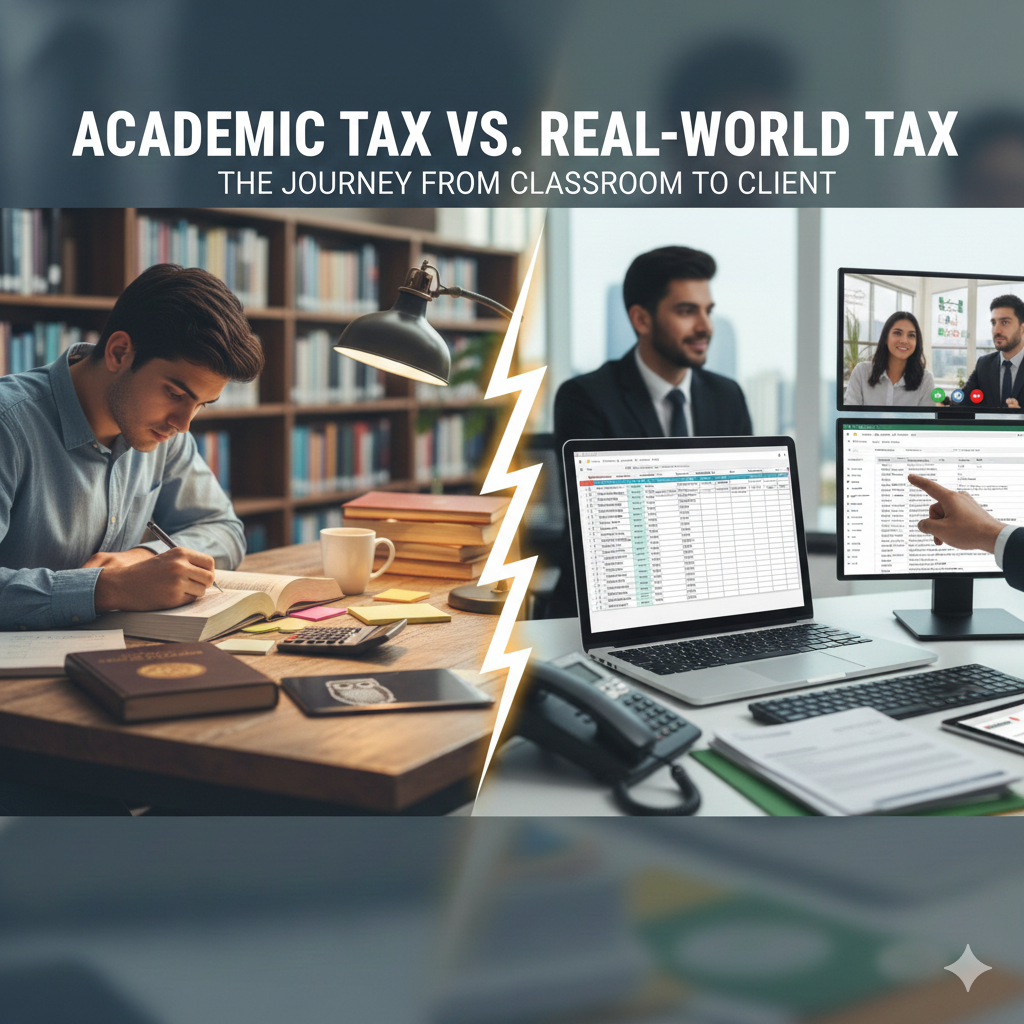
Many commerce students perform well in examinations yet struggle when they enter professional tax practice. The reason is not lack of intelligence, but the difference between academic structure and real-world application.
This article explains why such a gap exists and how students can bridge it effectively.
1. Academic Learning Is Examination-Oriented
College education focuses on:
- Theoretical understanding
- Section-based knowledge
- Numerical problem solving
- Structured answers
However, real tax practice requires application beyond textbook problems.
2. Professional Practice Is Situational
In real practice, every case is different:
- Clients provide incomplete information
- Documents may be inconsistent
- Notices require interpretation
- Strategic decisions must be taken
Professional judgment becomes essential.
3. Communication & Representation Skills
Tax professionals must:
- Draft replies
- Interpret notices
- Represent before authorities
- Communicate risk to clients
These skills are rarely taught in classrooms.
4. Bridging the Gap
Students must:
- Learn portal-based practical work
- Understand compliance flow
- Study real case scenarios
- Develop analytical thinking
Conclusion
The gap between syllabus and practice is natural. The key lies in structured practical exposure and disciplined skill development.