Introduction
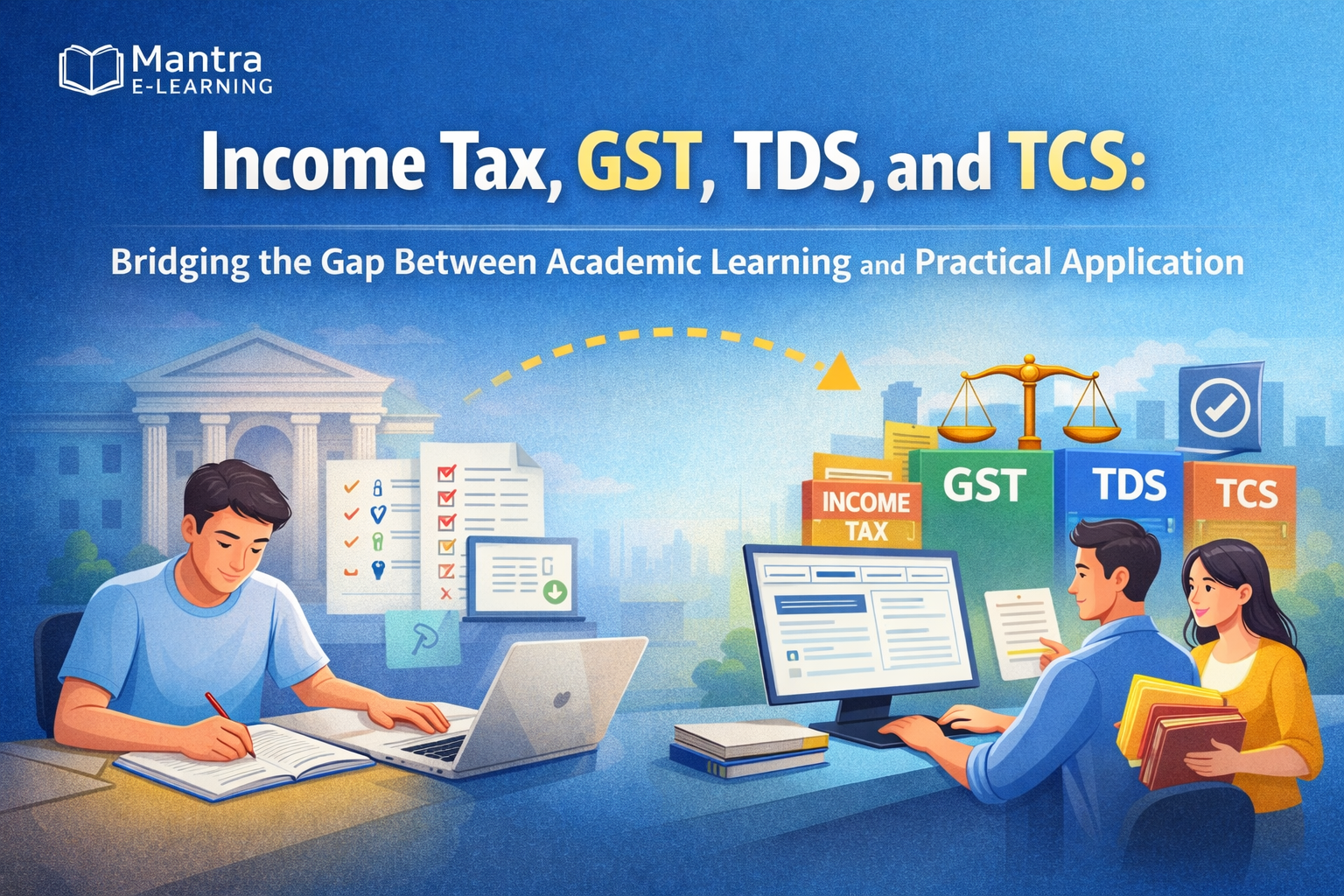
Commerce students are introduced to taxation subjects in academic programs, including Income Tax, GST, TDS, and TCS. However, there exists a significant gap between theoretical knowledge and practical professional application.
Understanding the interconnection between these tax systems is essential for anyone aspiring to build a career in accounting and taxation.
This article explains how academic tax concepts translate into real-world tax practice.
Watch the Complete video Explanation
This topic has also been explained in detail in the video below. Watch for practical clarity and structured understanding
In college, Income Tax, GST, and TDS are taught as separate subjects.
But in real-life practice, all of them are interconnected.
1. Academic Understanding vs Practical Exposure
In college:
- Income Tax is studied through computation problems.
- GST is understood through statutory provisions.
- TDS and TCS are defined conceptually.
In practice:
- Income Tax involves compliance, notices, assessment, and appeals.
- GST includes return filing, reconciliation, audits, and litigation.
- TDS/TCS affects cash flow, reporting, and mismatch notices.
The professional environment demands integration of all subjects.
2. How These Systems Are Connected
In real practice:
- Income Tax relies on TDS credits reflected in Form 26AS.
- GST turnover affects income tax computation.
- TCS entries impact capital transactions.
- AIS reporting cross-verifies disclosures.
Tax subjects are not isolated modules. They function as a connected compliance ecosystem.
3. Common Student Misconceptions
Students often assume:
- Income Tax is only about return filing.
- GST is limited to GSTR-3B and GSTR-1.
- TDS is merely deduction at source.
Professional reality is broader and compliance-driven.
4. Practical Skill Development Areas
To transition from academic to practical understanding, students must learn:
- Return filing workflow
- Data reconciliation
- Portal navigation
- Notice handling
- Basic drafting
- Compliance calendar management
These skills are not part of most academic syllabi.
Conclusion
A successful taxation career requires moving beyond theoretical computation to practical compliance integration.
Understanding how Income Tax, GST, TDS, and TCS interact builds professional maturity and long-term career growth.